
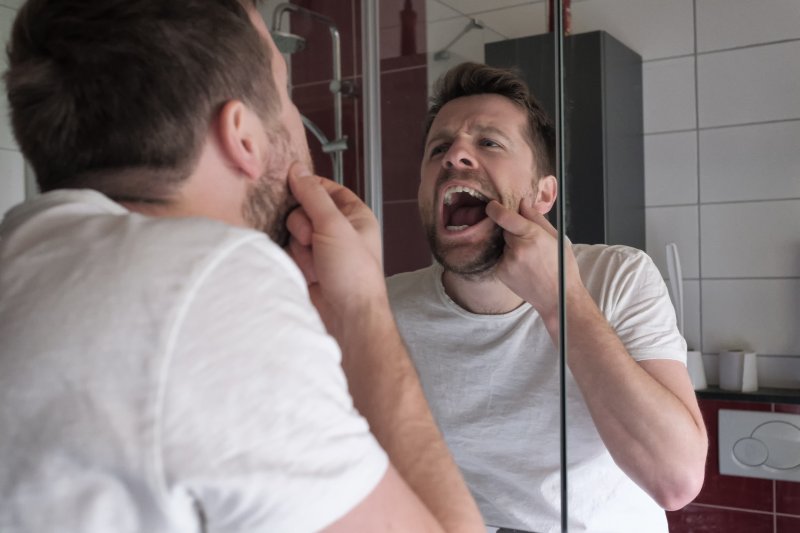
Healthy gums are firm, pink, and fit snugly around your teeth. So, if yours have started to feel soft, puffy, or spongy—even if they aren’t painful—that’s your mouth waving a red flag. Soft or spongy gums are often a sign of gum disease or other issues, and it’s better to act sooner rather than later! Here’s what could be going on and what to do about it.
The Most Likely Culprit: Gum Disease
By far, the most common cause of spongy gums is gum disease (also known as periodontal disease).
It starts as gingivitis, an early stage where inflammation caused by built-up plaque and bacteria irritates your soft tissues. At this stage, your gums may feel tender, look redder than usual, and bleed easily when you brush or floss. Fortunately, gingivitis is sometimes reversible with professional treatment and improved oral hygiene at home.
The biggest concern is what happens if your condition goes untreated. Left alone, gingivitis can progress to periodontitis, a more advanced stage of gum disease that damages the bone and tissue supporting your teeth. At this stage, the damage can’t be reversed, but the condition can be managed to prevent it from worsening.
Other Possible Causes
While gum disease is the most likely explanation, soft or spongy gums can sometimes have other contributing factors, such as:
- Hormonal Changes: Pregnancy, puberty, and menopause can all cause gums to become more sensitive and prone to inflammation, even with a solid oral hygiene routine.
- Vitamin Deficiencies: A prolonged lack of vitamin C can sometimes lead to soft, swollen, and bleeding gums. This issue isn’t as common today as it once was, but it’s worth exploring if other causes have been ruled out.
- Certain Medications: Some medications, including certain blood pressure drugs and anticonvulsants, can cause gum tissue to swell or overgrow. If you’ve recently started a new medication and noticed changes in your mouth, mention it to both your doctor and your dentist.
- Poor-Fitting Dental Appliances: Dentures or other appliances that don’t fit correctly can irritate gum tissue over time, causing localized softness or soreness.
Soft gums don’t usually heal on their own, and the earlier the cause is identified, the better your chances of a less invasive treatment. If your gums bleed regularly, feel tender to the touch, or have changed in appearance or texture, that’s your cue to make the call.
About the Practice
At Jacksonville Dental Specialists, our team offers comprehensive periodontal therapy for patients dealing with gum disease at every stage. With an in-office, board-certified periodontist and advanced treatments, like laser therapy and scaling & root planing, we’re fully equipped to protect your long-term oral health. Call (904) 683-4781 to schedule a periodontal consultation with us or visit our website to see a full menu of services.